


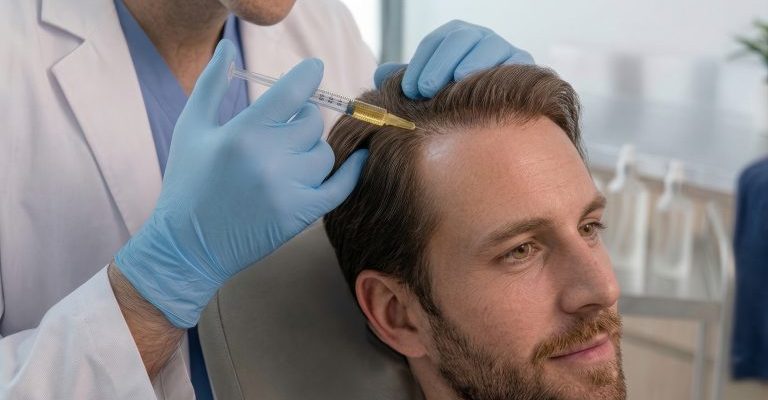
Exosome hair therapy is a non-surgical scalp treatment in which purified exosomes, tiny vesicles that cells use to send signals to each other, are delivered into thinning areas of the scalp to support the follicles you still have. It is one of the newest regenerative treatments for hair loss, used mainly for early to moderate thinning and to support native hair around a hair transplant. A session takes about 30 to 45 minutes, most plans involve 1 to 4 sessions about a month apart, and in Turkey a treatment package typically costs $2,200 to $3,400.
I am Dr. Mehmet Erdoğan, co-founder of Smile Hair Clinic in Istanbul and an associate member of FUE Europe. Exosomes attract a lot of attention, and with that comes a lot of overstatement. The early research is promising, but this is a newer treatment with a shorter track record than PRP or medication, and product quality varies widely. This page explains what exosome therapy is, who it may help, how it is done and what you can realistically expect.
| Exosome hair therapy at a glance | What to expect |
|---|---|
| What it is | Purified exosomes delivered into the scalp |
| Main goal | Support weakened follicles, reduce shedding, improve density |
| Best suited for | Early to moderate thinning, support around a hair transplant |
| Session length | About 30 to 45 minutes |
| Typical plan | 1 to 4 sessions, about a month apart |
| Downtime | None |
| First results | Usually within 2 to 4 months, peak around 6 months |
| Typical price in Turkey | $2,200 to $3,400 per treatment package |
What Is Exosome Hair Therapy?
Exosome hair therapy uses exosomes, microscopic vesicles released by cells to carry signals such as growth factors, proteins and genetic messages to other cells. The exosomes used for hair are usually derived from cultured mesenchymal stem cells from a donor and then purified, so the treatment delivers the signals without delivering any cells.
Placed close to the follicles, these signals are intended to support the cells that control the hair growth cycle, encourage weakened follicles back toward the growth phase and support blood supply in the scalp. In the video below, I explain what exosomes are, how they differ from stem cell treatments, who is a candidate and what results to expect.
Is Exosome Therapy the Same as Stem Cell Therapy?
No. Exosome therapy does not inject stem cells. It uses the signalling vesicles that stem cells release, after they have been separated and purified. This is one reason exosomes are considered more practical than cell-based treatments, but it also means the quality of the product depends heavily on how it is produced, purified and tested.
Who Is a Good Candidate for Exosome Hair Therapy?
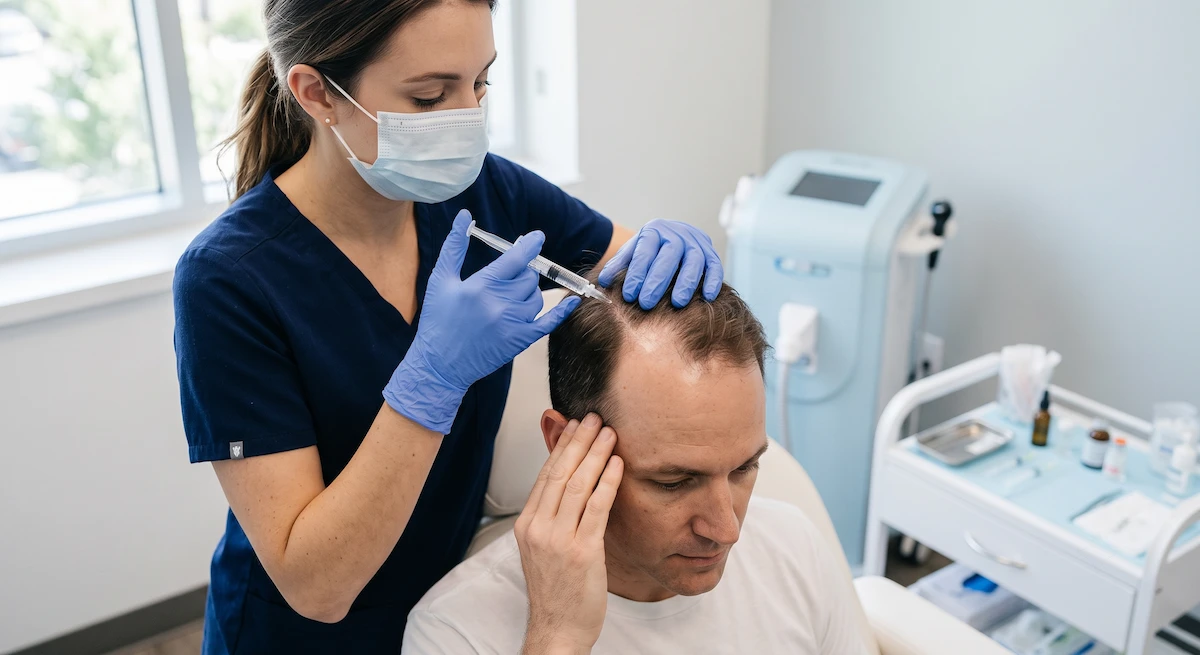
The best candidates have early to moderate thinning where the follicles are still alive, even if the hairs they produce have become finer. This includes men with early male pattern hair loss, around Norwood Type 2 to Norwood Type 4, women with early female pattern thinning, people with diffuse thinning after stress or hormonal change, and patients who want to support their native hair around a hair transplant. Women exploring all their options can also read the female hair transplant page.
Exosome therapy is not suitable during pregnancy or breastfeeding, for people with active scalp infections, uncontrolled autoimmune conditions, active cancer or current chemotherapy, or for anyone with a known allergy to the components of the product. Like PRP, it cannot regrow hair on smooth, shiny bald areas, which need a hair transplant.
How Is Exosome Hair Therapy Performed?
A session takes about 30 to 45 minutes. The scalp is cleaned and a numbing cream is applied. The exosome solution is then delivered into the thinning areas through fine injections or microneedling, at a controlled depth across the treated zone.
Most people feel only mild tingling or pressure, and there is no real downtime. Unlike PRP, no blood draw is needed, because the product is prepared in advance.
How Many Sessions Are Needed?
Most plans involve between one and four sessions, about a month apart, depending on the degree of thinning and how the scalp responds. The plan is set at consultation and adjusted after the first sessions. For international patients, exosome therapy is often combined with a hair transplant visit or scheduled during a short stay in Istanbul.
What Results Can You Expect From Exosome Hair Therapy?
Results build gradually. Improvements in shedding, density and hair thickness usually appear within two to four months, with the peak response often seen around six months.
Expectations should stay realistic. Early clinical studies, including a systematic review published in 2025, report encouraging gains in hair density and thickness with a good safety profile, but the number of patients studied is still small and long-term data is limited. Exosome therapy does not stop the genetic process behind pattern hair loss, so it works best alongside proven medical treatment such as minoxidil, and the effect needs to be maintained over time.
How Does Exosome Therapy Compare With PRP?
Both treatments aim to support weakened follicles, but they come from different sources and have different levels of evidence.
| Exosome therapy | PRP | |
|---|---|---|
| Source | Purified exosomes from cultured donor stem cells | Platelets from your own blood |
| How it works | Cell-to-cell signalling | Growth factor release from platelets |
| Blood draw needed | No | Yes |
| Typical number of sessions | 1 to 4 | 3 to 5, then boosters |
| Track record | Newer, evidence still growing | Longer, more studied |
| Typical cost per session in Turkey | $1,000 to $3,000 | $150 to $300 |
The two can be combined in some plans. You can read more on the PRP hair treatment page, and about other supportive options on the hair mesotherapy and ozone hair therapy pages.
Can Exosome Therapy Be Combined With a Hair Transplant?
Yes. Before surgery, exosome therapy can help strengthen thinning native hair and reduce shedding. After surgery, it is usually started about a month after the operation, once the scalp has healed, to support the native hair around the grafts during the shock loss period.
As with any supportive treatment, graft survival depends mainly on surgical skill, careful graft handling and correct aftercare, not on what is added afterwards. Aftercare advice is collected in the patient guide.
Is Exosome Hair Therapy Safe?
When a properly sourced and purified product is used by a doctor in a sterile setting, exosome therapy is generally well tolerated. The usual effects are mild redness and tenderness at the treated sites, which settle within hours.
The main safety concern is product quality. Exosome products are not regulated in the same way everywhere, and health authorities including the US FDA have warned about unapproved and poorly controlled exosome products sold by some clinics. Before treatment, it is reasonable to ask where the product comes from, how it is purified and tested, and who will administer it. You can read about my background and memberships on the about me page.
How Much Does Exosome Hair Therapy Cost in Turkey?
Exosome hair therapy in Turkey typically costs between $2,200 and $3,400 for a treatment package, depending on the product, the number of sessions and the area treated. That is roughly 60 percent lower than in the United States, where a single session usually costs $1,500 to $4,000 and a full protocol of four to six sessions can reach $8,000 to $24,000.
| Country | Typical price | Full course |
|---|---|---|
| Turkey | $2,200 to $3,400 per package | Usually covered by one package |
| United States | $1,500 to $4,000 per session | $8,000 to $24,000 for 4 to 6 sessions |
| United Kingdom | £300 to £3,500 or more, depending on the clinic | Varies widely between clinics |
Maintenance adds to the cost over time. In the United States, follow-up treatments every 6 to 12 months can cost $4,000 to $12,000 a year, which makes the difference in Turkey even larger for patients who plan to continue treatment.
Because exosome therapy costs more than PRP or mesotherapy, it is worth confirming first that it is the right treatment for your hair loss. To find out, send clear photos of your hairline, crown and parting, along with any recent blood test results, through the contact page.
Frequently Asked Questions About Exosome Hair Therapy
Do exosomes really work for hair loss?
Early studies are encouraging, especially for early to moderate thinning, but the research is still young and results vary between people.
Can exosome therapy regrow hair on bald areas?
No. It needs living follicles to work on. Smooth, shiny bald areas need a hair transplant.
Is exosome hair therapy painful?
Most people feel only mild tingling or pressure, and a numbing cream is used beforehand.
When will I see results?
Usually within two to four months, with the best response around six months.
Are the exosomes made from my own cells?
Usually not. Most exosome products for hair are derived from cultured donor stem cells and purified, which is why product quality matters so much.
Is exosome therapy better than PRP?
Not necessarily. PRP has a longer track record and costs less, while exosomes are newer. The right choice depends on your hair loss, and the two can be combined.
Can I have exosome therapy after a hair transplant?
Yes, usually from about a month after surgery, once the scalp has healed.
Do I need to keep having sessions?
Pattern hair loss continues in the background, so the effect usually needs to be maintained with medical treatment and, for some patients, repeat sessions.
Planning Your Hair Treatment With Dr. Mehmet Erdoğan
New treatments are exciting, but the best plan is still the one that fits the cause and stage of your hair loss. If you share a few photos and any recent blood tests, I will tell you honestly whether exosome therapy, PRP, medical treatment, a hair transplant or a combination is the right route for you. You can reach me through the contact page.