


An Afro hair transplant restores thinning or bald areas in people with tightly curled hair by moving follicles from the back of the scalp into the hairline, temples, edges or crown, using extraction methods adapted to the curved shape of Afro hair follicles under the skin. It is done under local anesthesia in one day, usually takes 6 to 9 hours, and the full curl pattern and density appear 12 to 18 months later. In Turkey, an Afro hair transplant typically costs $2,500 to $4,500.
I am Dr. Mehmet Erdoğan, co-founder of Smile Hair Clinic in Istanbul and an associate member of the International Society of Hair Restoration Surgery (ISHRS). Afro hair is among the most demanding hair types to transplant, and also one of the most rewarding, because curly hair covers the scalp so well that a natural density is often reached with fewer grafts. This page explains what makes Afro hair different, who is a good candidate, how the procedure is performed, what recovery looks like and what it costs.
| Afro hair transplant at a glance | What to expect |
|---|---|
| Technique | FUE with curl-adapted extraction, usually manual or slow micromotor |
| Main challenge | Curved follicles under the skin |
| Typical graft count | 2,000 to 4,000, up to about 5,000 for advanced loss |
| Anesthesia | Local anesthesia, light sedation on request |
| Operation time | About 6 to 9 hours |
| Stay in Istanbul | 3 to 4 days |
| Return to work | About 5 to 7 days |
| Final result | 12 to 18 months |
| Typical price in Turkey | $2,500 to $4,500 |
What Is an Afro Hair Transplant?
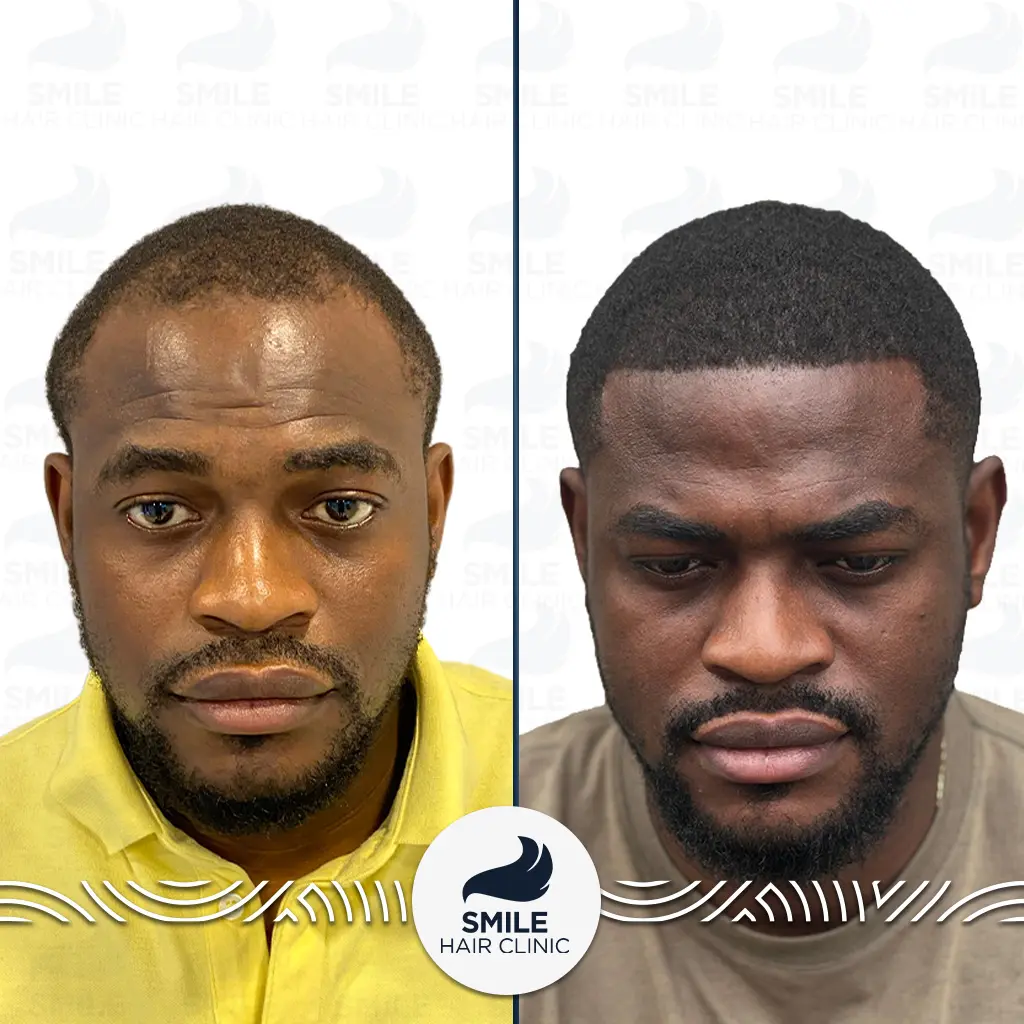
An Afro hair transplant is a hair restoration procedure designed for tightly curled, coiled or kinky hair. Individual follicles are taken from the back of the scalp and implanted into thinning areas, and because they are your own, they keep growing with the same curl pattern once they settle.
The goal is not only density but a result that matches Afro hair as it naturally grows. That means respecting the softer, rounded shape of an Afro hairline, the direction of growth at the temples and edges, and the way curls group together on the scalp.
Why Is Afro Hair Different to Transplant?
Afro hair is different because the follicle itself is curved beneath the skin, not only the hair above it. A straight punch that follows only the visible angle of the hair can cut through the follicle lower down, which is called transection and leaves a graft that may not grow.
To avoid this, extraction has to follow the curve. In practice that means a slightly larger punch, a shallower initial depth and careful manual or slow-speed micromotor extraction, adjusted after testing how each patient’s follicles behave. It takes longer than extraction in straight hair, but it protects the grafts. There are two advantages that balance this out. Curly hair stands up from the scalp and covers more area, so fewer grafts are needed for the same visual density, and the curl naturally hides small gaps.
Marshall, who works in the film industry, came to me for his planning, and the video below shows how an Afro hairline and donor plan are worked out.
Who Is a Good Candidate for an Afro Hair Transplant?
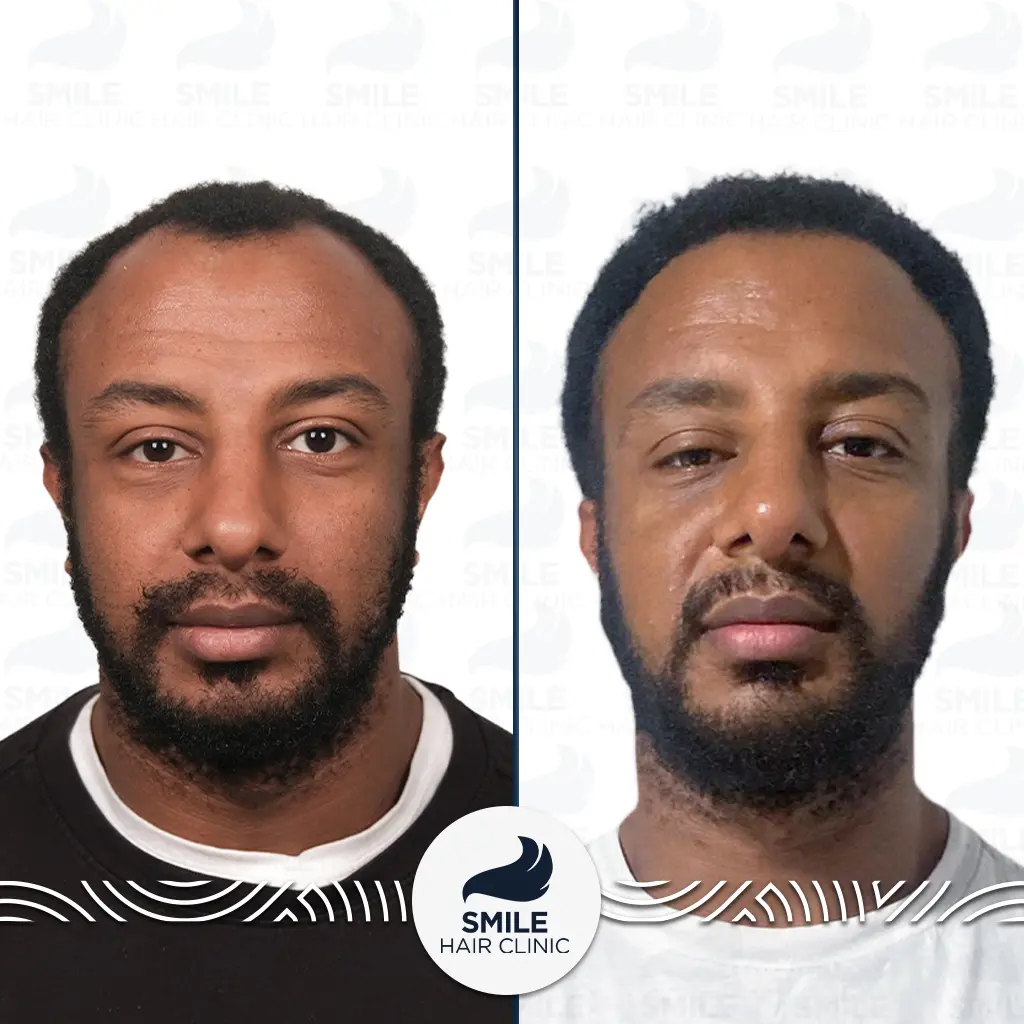
A good candidate is a healthy adult with stable hair loss, a donor area at the back of the scalp with enough density and no history of severe keloid scarring. The most common situations I see are genetic thinning at the hairline or crown, traction alopecia from years of tight braids, weaves, extensions or buns, thinning edges and temples, and hair loss from chemical relaxers or scars.
Some cases need to be paused or declined. Active scarring alopecias, including the type that spreads outward from the crown in some women, must be controlled before surgery because they can destroy transplanted hair. A strong tendency to keloid scars raises the risk of raised scarring in the donor area. And a very thin donor area may not supply enough grafts for a worthwhile result.
Afro Hair Transplant for Women and Traction Alopecia
Traction alopecia is one of the conditions that responds best to a transplant, as long as the hairstyles that caused it have stopped. It usually affects the edges and temples, and restoring them often makes the biggest difference to how a woman feels about her hair. I performed Mara’s 2,820 graft operation, and Cassandra and the patient in the third video share their own experience.
Women with other causes of thinning can read about the wider options on the female hair transplant page.
How Many Grafts Does an Afro Hair Transplant Need?
Most Afro hair transplants use 2,000 to 4,000 grafts, and advanced hair loss can need up to about 5,000. Restoring edges and temples after traction alopecia sits at the lower end, while a full hairline and crown sits higher. Because curly hair covers more scalp per graft, the same number of grafts usually looks denser in Afro hair than in straight hair.
Ezekiel received 5,000 grafts for a larger restoration, and his video shows the operation day.
How Is an Afro Hair Transplant Performed?
An Afro hair transplant is performed in one day, under local anesthesia, with design, extraction, channel opening and implantation. It takes longer than a standard hair transplant, usually six to nine hours, because extraction has to be slower and more careful.
We start by designing the hairline. An Afro hairline is usually softer and more rounded than a typical European hairline, and the temples and edges are shaped to suit your face and the way you wear your hair. A few test grafts are then taken to check how deep and curved your follicles are, and extraction continues with the punch and depth adjusted to them. Channels are opened at the right angle for curly hair, and each graft is implanted so that its curl turns in the same direction as the surrounding hair. Larger procedures usually need the donor area shaved, while smaller edge or hairline work can sometimes be done with only partial shaving.
Dr. Mohammed Alhi, an emergency surgeon, describes his own Afro hair transplant at our clinic in this video.
What Does Recovery Look Like After an Afro Hair Transplant?
Recovery follows the same pattern as any hair transplant. Mild swelling and small crusts settle within the first one to two weeks, most people return to work after five to seven days, and the transplanted hairs shed before regrowing from around month three.
| Time after surgery | What you will notice |
|---|---|
| Days 1 to 3 | Mild swelling, possibly on the forehead around days 2 and 3, first wash at the clinic |
| Days 7 to 14 | Crusts soften and wash off |
| Weeks 3 to 6 | Transplanted hairs shed while the follicles stay in place |
| Months 3 to 5 | New hairs start to appear |
| Months 6 to 9 | Clear increase in density, curls start to form |
| Months 12 to 18 | Full curl definition and final density |
Mariyah had 3,100 grafts with me, and this short video shows her early result at six months.
When Can You Style, Braid or Cut Your Hair Again?
A loose hat is usually fine after 7 to 10 days. Scissor cuts are possible after about a month, but clippers on the transplanted area should wait two to three months. Most importantly, avoid tight braids, weaves, extensions and chemical relaxers on the treated area for several months, and if traction caused your hair loss, choose looser styles for good. More aftercare advice is collected in the patient guide.
Is an Afro Hair Transplant Permanent?
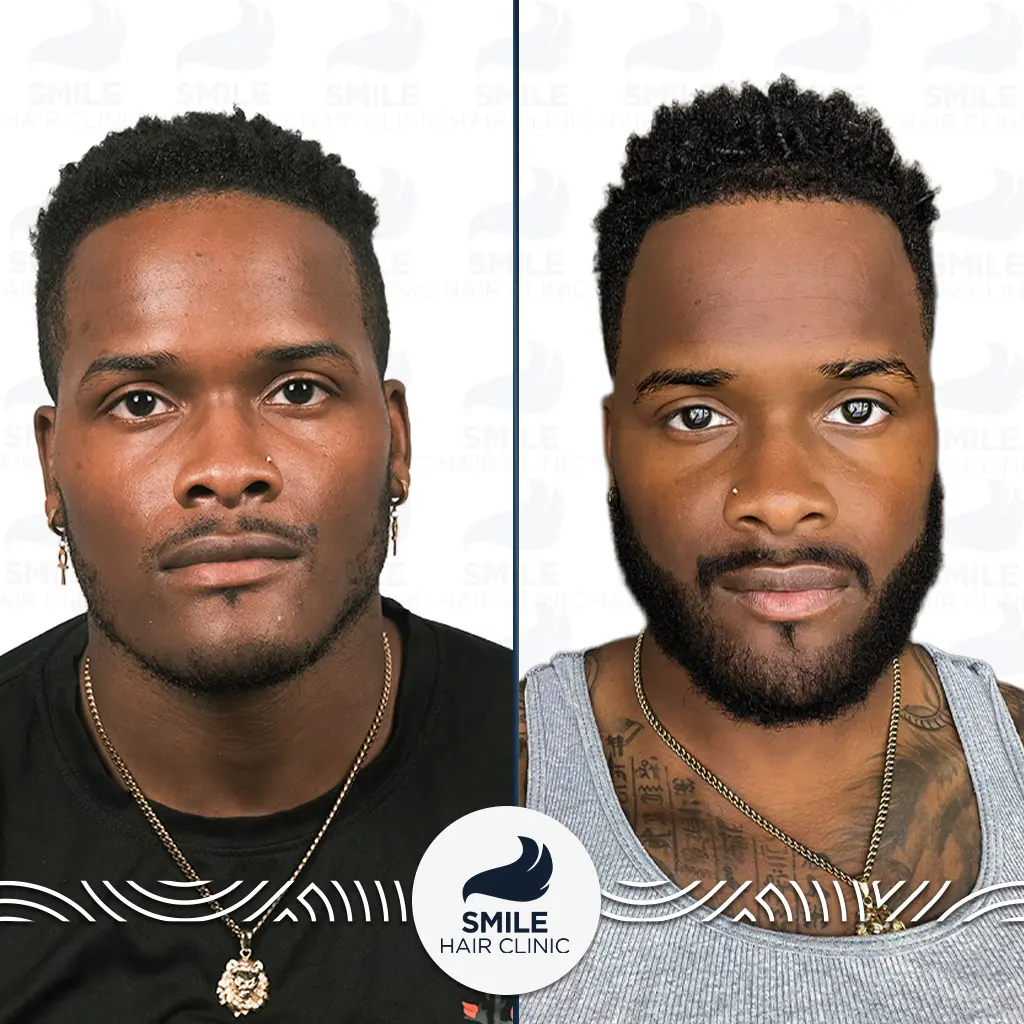
Yes, the transplanted hair is permanent and keeps its natural curl. It comes from an area of the scalp that is resistant to pattern hair loss, and it keeps that quality after moving. The surrounding native hair can still thin over time, and traction will damage transplanted hair just as it damaged the original, which is why protecting the edges from tension is part of keeping the result.
Can You Combine an Afro Hair Transplant With a Beard Transplant?
Yes, scalp and facial hair can be restored in the same visit if the donor area can support both. Afro beard hair needs the same curl-aware approach, and grafts are placed so that the new beard hair curls in the same direction as the rest. This patient had an Afro beard transplant at our clinic. More detail is on the beard transplant page, and brows can also be treated with an eyebrow transplant.
How Much Does an Afro Hair Transplant Cost in Turkey?
An Afro hair transplant in Turkey typically costs between $2,500 and $4,500, with repair cases or very detailed hairline work sometimes costing more. The same procedure usually costs $6,000 to $10,000 in the United Kingdom and $9,000 to $16,000 in the United States.
The package options and who performs each one are explained on the hair transplant cost in Turkey page, and the whole procedure step by step on the hair transplant in Turkey page.
| Country | Typical Afro hair transplant price |
|---|---|
| Turkey | $2,500 to $4,500 |
| United Kingdom | $6,000 to $10,000 |
| United States | $9,000 to $16,000 |
The price depends mainly on who performs the surgery, the size of the area and the graft count. All-inclusive packages cover the operation, medications, hotel, VIP transfers, an interpreter and aftercare follow-up. The package options and who performs each one are explained on the hair transplant in Turkey page. To receive a personal plan, send clear photos of your hairline, temples, crown and donor area through the contact page.
What Are the Risks of an Afro Hair Transplant?
An Afro hair transplant is safe when it is performed by a doctor experienced with curly hair in a licensed, sterile facility. Temporary swelling, crusts, itching and mild numbness are normal and settle on their own.
Three risks deserve particular attention in Afro hair. Transection of curved follicles during extraction can reduce growth, which is why technique matters so much. Darker skin is more prone to keloid or raised scarring and to temporary pigment changes, so your healing history is checked before surgery and incision depth and spacing are adapted. And folliculitis or ingrown hairs can appear during regrowth, usually settling with simple treatment. Before booking, ask how many Afro hair cases your doctor has performed and to see results similar to yours. You can read about my background and memberships on the about me page.
Frequently Asked Questions About Afro Hair Transplant
Can Afro hair be transplanted successfully?
Yes. With a curl-adapted extraction technique and an experienced team, Afro hair transplants achieve excellent, natural results.
Does the curl pattern change after a transplant?
No. Transplanted hair keeps its natural curl, although new hairs can look straighter or finer for the first months before their full texture returns.
Do I need to shave my head?
Larger procedures usually need the donor area shaved. Smaller edge or hairline restorations can sometimes be done with partial shaving, which is decided after your assessment.
Will people notice I had a hair transplant?
In the first week or two, small crusts may be visible. After that, and especially once the hair grows back, a well-designed Afro hairline is very difficult to spot.
When can I go to the gym?
Light exercise is usually fine after about two weeks, and intense training after three to four weeks.
Can traction alopecia be fixed permanently?
Yes, as long as the tight hairstyles that caused it are not repeated. Transplanted hair is just as vulnerable to traction as the original hair.
Is an Afro hair transplant safe for people prone to keloids?
It depends on how severe the tendency is. A mild history may be manageable with adapted technique, while a history of severe keloids can be a reason not to operate. Your doctor will assess this before planning.
How do I book an Afro hair transplant with Dr. Mehmet Erdoğan?
Send clear photos of your hairline, temples, crown and the back of your scalp through the contact form or WhatsApp. You will receive an honest assessment, a graft estimate and an all-inclusive quote.
Planning Your Afro Hair Transplant With Dr. Mehmet Erdoğan
A good Afro hair transplant looks like your own hair, with the hairline, edges and curl that suit you. If you share a few photos, I will review them, explain what can realistically be achieved and suggest the graft range and approach that fit your hair. You can reach me through the contact page, and media coverage of our work is collected on the press and media page.