


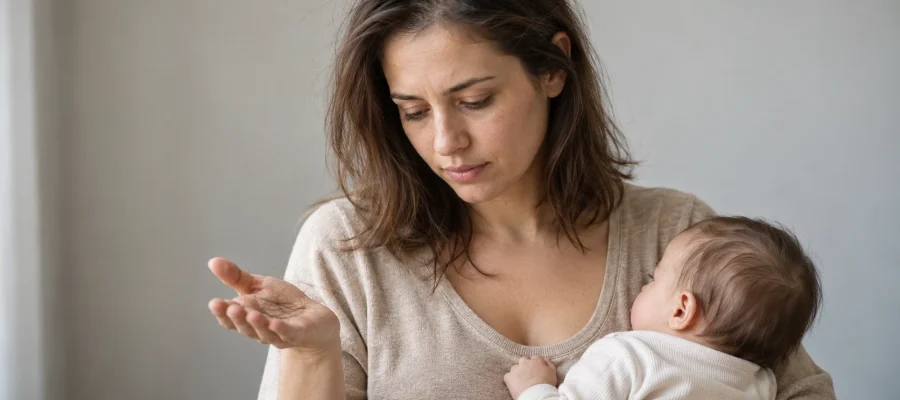
Many women remember their pregnancy hair as the best it has ever been: thicker, shinier and falling out less than usual. A few months after the baby arrives, that changes. Hair starts coming out in the shower, on the pillow and in the hairbrush, sometimes in handfuls, and often just as sleep is short and everything else feels new.
It is one of the most common changes after childbirth and one of the least talked about before it happens. Because it arrives at an emotionally demanding time, it can also be one of the most worrying. Knowing why it happens, how long it normally lasts and which signs suggest something more than the usual postpartum shed makes it far easier to judge when to simply wait and when to have it checked.
Postpartum Hair Loss at a Glance
Postpartum hair loss is a temporary shedding, called postpartum telogen effluvium, that affects most women after giving birth. It typically starts around three months after delivery, peaks at about five months and settles by eight to twelve months, with the hair regrowing from the same follicles. See a doctor if heavy shedding continues beyond a year, if you notice bald patches or a widening parting, or if you also have symptoms such as extreme tiredness, palpitations or feeling cold.
Why does hair fall out after pregnancy?
Pregnancy holds hair in the growth phase
Each hair follicle cycles between a long growth phase (anagen), a short transition and a resting phase (telogen) of about three months, after which the hair falls out and a new one begins. Normally only a small share of hairs are resting at any time, so daily shedding goes unnoticed.
During pregnancy, high levels of oestrogen and other hormones keep more hairs in the growth phase for longer. Fewer hairs fall out than usual, which is why hair often feels fuller in the second and third trimester.
Delivery releases them all at once
After birth, hormone levels drop sharply. The hairs that were held back move into the resting phase together and are shed a few months later. A study of 116 women in Istanbul measured this directly with trichoscopy: the share of growing hairs was significantly lower and the share of resting hairs significantly higher in the fourth month after delivery than during late pregnancy.
In other words, postpartum shedding is largely the hair you did not lose during pregnancy, arriving late. It is not a sign that the follicles are damaged.
Factors that can make it heavier
A questionnaire study of 331 women found that more than 90% reported some postpartum hair loss, and that preterm delivery and breastfeeding for longer than six months were linked to more shedding. Other common contributors are:
- Blood loss and low iron stores after delivery, which can add deficiency-related shedding on top of the hormonal shed.
- Lack of sleep and physical stress, which are themselves known triggers of telogen effluvium.
- Thyroid changes in the first year after birth (see below).
Postpartum hair loss timeline
In the same study of 331 women, hair loss started on average 2.9 months after delivery, peaked at 5.1 months and ended at 8.1 months. Individual timing varies, but most women follow a similar pattern.
| Time after birth | What usually happens |
|---|---|
| 0–2 months | Little change; hair may still feel like pregnancy hair |
| 2–4 months | Shedding begins, often suddenly and noticeably |
| 4–6 months | Shedding at its heaviest; the temples and hairline may look thinner |
| 6–9 months | Shedding slows; short new hairs appear along the hairline and parting |
| 9–12 months | Shedding back to normal for most women; regrowth continues |
| 12–18 months | New hairs reach a length where overall fullness returns |
When does postpartum hair loss start?
Most women notice it between two and four months after giving birth. It rarely starts in the first few weeks, because hairs that enter the resting phase at delivery take around three months to fall out.
When does postpartum hair loss stop?
For most women, shedding is back to normal by eight to twelve months after delivery. Because new hair grows only about a centimetre a month, it can take another six months or more before the hair looks as full as it did before pregnancy.
Why the hairline looks thinnest
The short regrowing hairs often stand up along the front hairline and temples, often called “postpartum bangs”. It can look like a receding hairline, but it is actually new hair coming back.
When to see a doctor about postpartum hair loss?
The usual postpartum shed needs no treatment. A doctor’s assessment is worthwhile when the pattern or timing does not fit, because some of the causes that overlap with this period are easy to treat once they are found.
Warning signs
- Heavy shedding that continues beyond 12 months after delivery.
- Bald patches: round, smooth areas with no hair suggest alopecia areata rather than shedding.
- A widening parting or thinning on the top of the scalp that does not fill in as shedding settles.
- Other symptoms such as exhaustion beyond what a new baby explains, palpitations, weight changes, feeling unusually cold or hot, or very heavy periods.
- Scalp redness, scaling, itching or pain, which ordinary shedding never causes.
Conditions that can hide behind postpartum shedding
Postpartum thyroiditis
Inflammation of the thyroid in the first year after birth affects about 5% of women, according to a review of postpartum thyroiditis. It often causes a phase of an overactive thyroid followed by an underactive one, and both can cause hair loss. Women who have had it are at higher risk of permanent hypothyroidism, so it is worth diagnosing. A simple blood test (TSH) checks it.
Iron deficiency
Blood loss during delivery and the demands of pregnancy and breastfeeding can leave iron stores low. Low ferritin can add to and prolong shedding, and it is checked with a blood test.
Female pattern hair loss
In some women the postpartum shed reveals female pattern hair loss that was already developing. Instead of filling in, the top of the scalp and the parting stay thin after the shedding stops. This is a separate, long-term condition that responds to treatment and should be assessed by a doctor.
Your mental wellbeing matters too
Postpartum hair loss is more than cosmetic for many women. A study of 331 mothers found that women with very heavy postpartum hair loss were about four and a half times more likely to report anxiety than those with none. If it is affecting how you feel, mention it to your doctor or midwife; that alone is a good enough reason to have it checked.
What helps while your hair recovers?
Nothing can stop the postpartum shed once it has started, because the hairs have already entered the resting phase. What you can do is avoid making it worse and support the regrowth.
Be gentle with the hair you have
- Use a wide-tooth comb and avoid brushing wet hair hard.
- Skip tight ponytails, buns and braids, which pull on the hairline that is already regrowing.
- Go easy on heat styling, bleaching and chemical treatments for a few months.
- A shorter cut can make the shedding less noticeable and the hair easier to manage.
Look after nutrition and iron
Keep eating regular, balanced meals with enough protein, which is not always easy with a newborn. If your doctor recommended continuing a prenatal supplement, carry on with it. If shedding is heavy, ask for a blood test for ferritin and thyroid function rather than adding supplements at random.
Check every treatment if you are breastfeeding
Many products and medications marketed for hair loss are not recommended while breastfeeding. Before starting anything, from tablets to scalp solutions, ask your doctor whether it is safe for you and your baby. If thinning persists after the normal recovery period, in-clinic options such as PRP hair treatment and hair mesotherapy can be discussed as part of a proper assessment.
Why a hair transplant is rarely the answer
In postpartum telogen effluvium, the follicles are not lost; they are simply resting and will grow again. Moving follicles from the back of the scalp to an area that is going to recover on its own makes no sense, and during the shedding phase it would also be impossible to plan accurately, because the donor area at the back can shed too.
A transplant only becomes a consideration when, well after the shedding has settled, some areas have clearly not recovered, for example because of female pattern hair loss, long-term traction from tight hairstyles, or a naturally high hairline. In those cases the cause is assessed first and treated where possible, and hair transplant for women is planned only once the hair has been stable for some time.
Dr. Erdoğan’s Reassurance: Give It a Year Before You Judge It
Postpartum shedding can look dramatic, but it is one of the most predictable forms of hair loss there is. It follows the hormonal changes of pregnancy and birth, it peaks around five months, and for most women it is over within a year, with the hair growing back from the same follicles.
The time to look more closely is when that timeline does not hold: shedding that continues past a year, patches, a parting that stays wide, or symptoms that point to the thyroid or low iron. Those are treatable, and finding them early protects both your hair and your health.
A Year On and Your Hair Still Has Not Filled In?
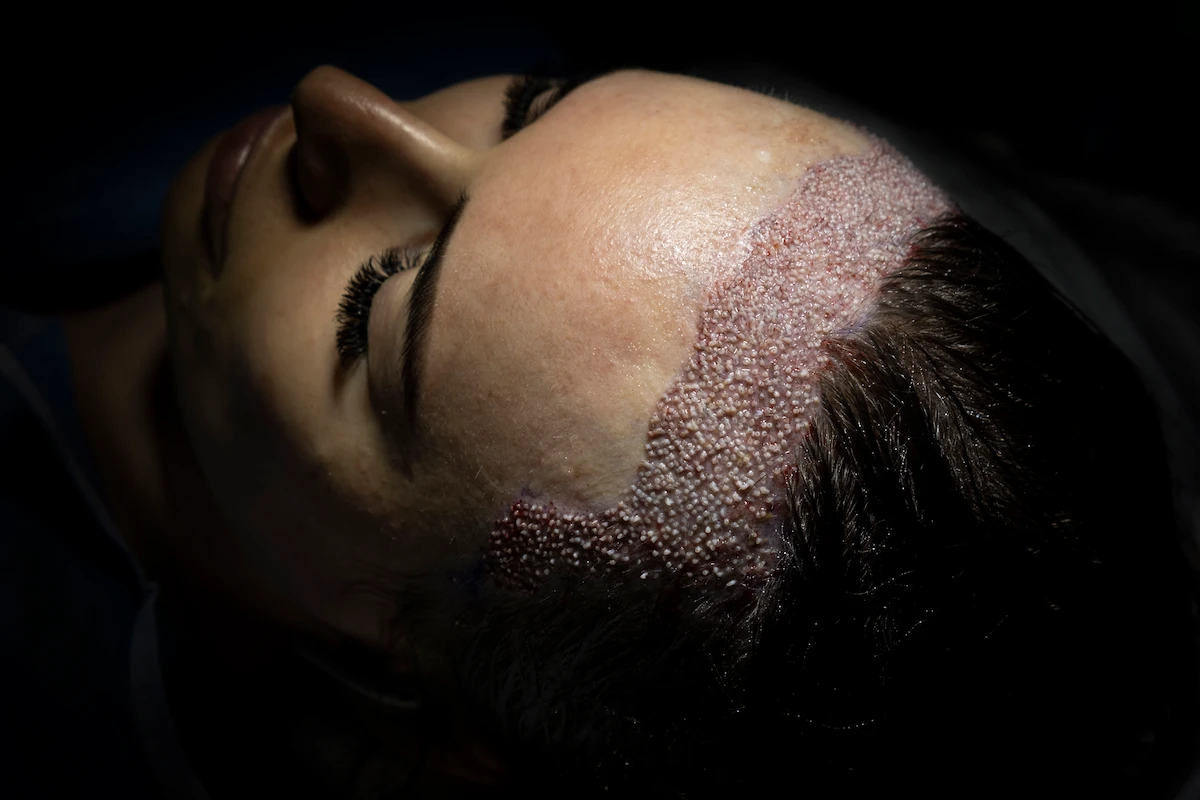
If your baby’s first birthday has come and gone and some areas still look thin, an assessment can show whether the hair is simply still regrowing or whether something else, such as female pattern hair loss, is involved. Send photos of your parting, hairline and the back of your scalp, together with any recent blood tests, and you will get an honest view of whether to wait, treat or consider restoration. If a transplant does turn out to be the right step, see how a hair transplant in Turkey is planned for women, what a hair transplant in Turkey costs, and what the hair transplant package includes during your stay.
Frequently asked questions
When does postpartum hair loss start?
Usually two to four months after giving birth. In one study of 331 women, the average start was just under three months after delivery.
How long does postpartum hair loss last?
Shedding typically peaks around five months and settles by eight to twelve months after delivery. Full regrowth can take another six months or more because hair grows about a centimetre a month.
Is postpartum hair loss permanent?
No. The follicles are not damaged and the hair grows back. If some areas stay thin after a year, another cause such as female pattern hair loss, thyroid disease or iron deficiency should be checked.
Does breastfeeding make postpartum hair loss worse?
The evidence is mixed. One study linked breastfeeding for more than six months with more hair loss, while another found more hairs in the growth phase at four months in breastfeeding mothers. Breastfeeding should not be stopped because of hair loss.
Do vitamins help postpartum hair loss?
They help if you are deficient, particularly in iron. Taking extra vitamins without a deficiency does not stop the shedding, and some hair products are not suitable while breastfeeding, so check with your doctor first.
This article is for information only and does not replace an in-person medical examination.
Sources
- Gizlenti S, Ekmekci TR. The changes in the hair cycle during gestation and the post-partum period. J Eur Acad Dermatol Venereol. 2014;28(7):878–881. doi:10.1111/jdv.12188
- Hirose A, et al. Investigation of exacerbating factors for postpartum hair loss: a questionnaire-based cross-sectional study. Int J Womens Dermatol. 2023;9(2):e084. doi:10.1097/JW9.0000000000000084
- Hirose A, et al. Postpartum hair loss is associated with anxiety. J Obstet Gynaecol Res. 2024;50(12):2239–2245. doi:10.1111/jog.16130
- Nguyen CT, Mestman JH. Postpartum thyroiditis. Clin Obstet Gynecol. 2019;62(2):359–364. doi:10.1097/GRF.0000000000000430